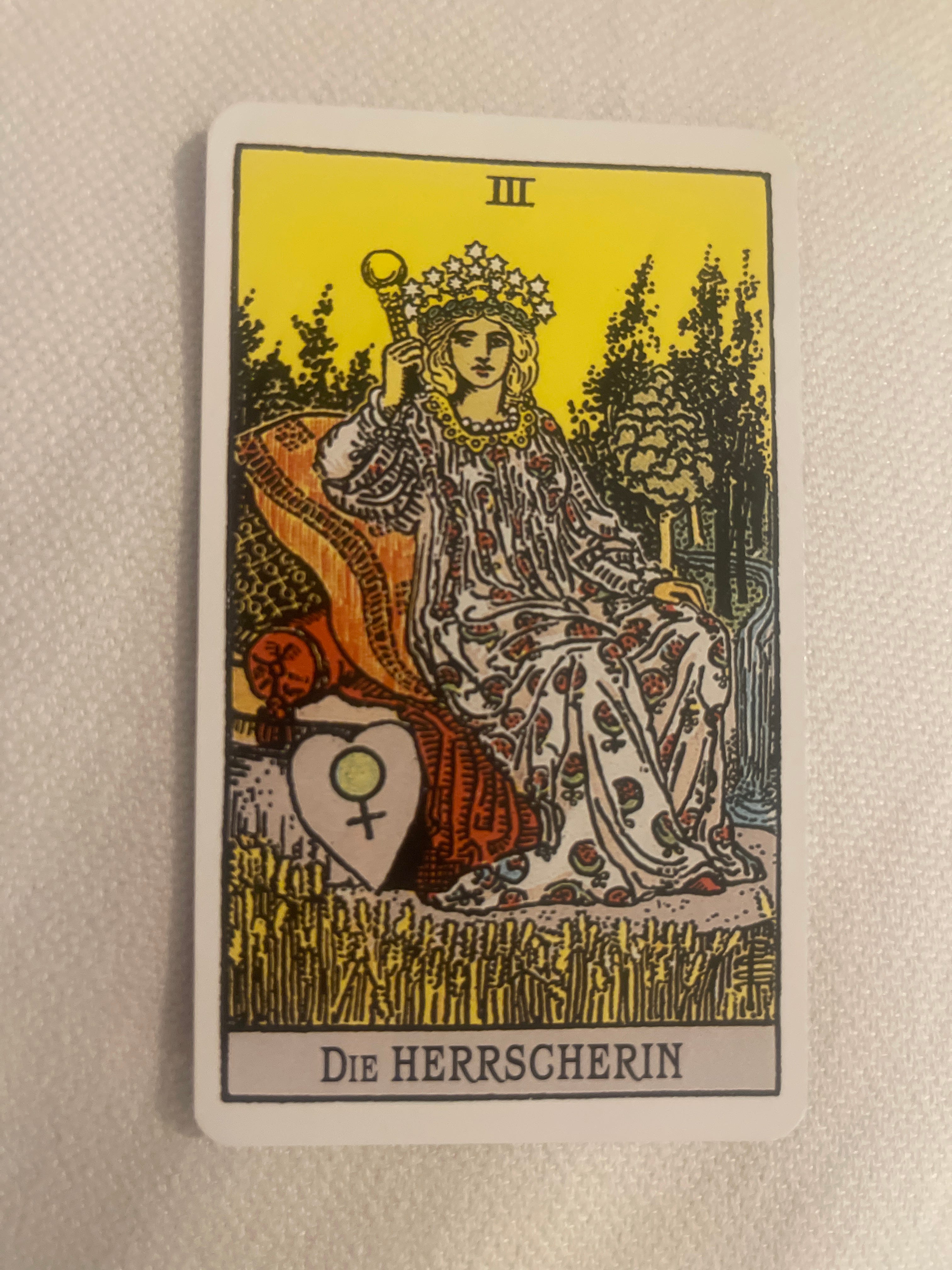
The Tarot Series: The Empress
Tarot Card Series

The Empress is not merely an archetype of femininity—she is the result of something. She is what happens when creation has been called into being, when the intangible impulse to exist settles into form. Where the High Priestess guards the threshold, veiled in mystery, the Empress is the manifestation on the other side: body, earth, nature, the raw material of life itself.
She is the earthbound path. Soil and seed. Sensation and flesh. The orchard heavy with fruit, the river that carves through stone, the womb that brings forth life. In her, spirit takes on weight and texture. She is the reminder that existence does not float in abstraction but presses against the skin, fills the lungs, and roots itself in the ground beneath our feet.
And yet, in being so deeply material, the Empress provokes the spiritual. She is ying to yang, form to force, matter to spirit. By offering the body, she awakens the hunger for what lies beyond the body. By anchoring us in the natural world, she creates the contrast that makes the spiritual path visible. The two do not cancel but complete each other: to walk the full line, one must experience both. To deny the Empress is to remain ungrounded; to refuse her counterbalance is to mistake transcendence for escape. True wisdom is born in the middle, where matter and spirit clasp hands.
The symbolism of the Empress card in the Major Arcana reveals this layered paradox. She is enthroned in a field of wheat, crowned with twelve stars—sign of cosmic cycles and the constellations. The river winds behind her, a symbol of life’s continuity and the ceaseless flow of time. In her lap, she cradles a scepter, authority not of conquest but of fertility and abundance. Her robe, adorned with pomegranates, echoes ancient symbols of womb, blood, and generative power. Everything about her is lush, sensory, fertile, teeming.
Yet her abundance is not simple indulgence. It is a teaching. The Empress reminds us that the path to wisdom begins in the body. Not just sexuality, though that is part of her domain, but the whole sweep of sensual experience: the feel of grass underfoot, the scent of rain on earth, the warmth of bread broken and shared. These sensations are not distractions from spirit but the doorway into it. To know the eternal, we must first inhabit the temporal.
She is the river that is always the same and never the same. Its waters change with every moment, yet the river remains. So too with us: our bodies alter, cells renew, circumstances shift, and yet something essential endures. She shows us that change is not betrayal of self but the very rhythm of existence.
The Empress is paradox made flesh: mystical and practical, abundant and disciplined, material and initiatory. She teaches that the raw materials of life—body, nature, desire, sensation—are not obstacles to enlightenment but its beginning. To reject her is to miss the first step. To embrace her is to walk the earthy half of the circle, until you arrive in the middle, where both spirit and matter breathe together.